A screening technology that selects
in real process conditions.
Saku’s technology enables rapid evaluation of large host cell libraries directly in bioreactors. As a result, selections map more reliably to manufacturing outcomes, there are fewer false positives, and translation from strain engineering to process development is streamlined.


What our technology enables

Bench-top bioreactor screening conditions
Screens are designed to better reflect real process conditions.
_edited.jpg)
Library sizes of 1M+ variants
Search massive amounts of genetic diversity.
_edited.jpg)
Multiplex selection
Selection for growth rate, secrete rate, and other phenotypic properties at the same time.
_edited.jpg)
Rapid assay development
Compresses time to start screens from months to weeks.


How Picoshell screening works
PicoShells are hollow, porous microparticles that encapsulate individual cells while remaining permeable to nutrients and gases. PicoShells can also be placed into benchtop bioreactors, allowing cells to be cultured in bioreactor conditions and grow into clonal colonies.
By screening cells under conditions that more closely reflect manufacturing environments, PicoShells make it possible to screen large libraries while improving scale-up reliability.
Library designs can also be structured to avoid triggering GMO designation during screening.
1
Encapsulate library into Picoshells


Millions of individual cells are encapsulated into separate Picoshells: hollow, porous microparticles
2
Culture in Picoshell bioreactors

Colonies grow and produce product under bioreactor conditions, not a well plate or microfluidic chip
Screen with flow cytometry

3
Millions of colonies are screened based on coupled growth and productivity via FACS

Validated strain improvement
Process validated in collaboration with ABPDU and Lawrence Berkeley National Laboratories
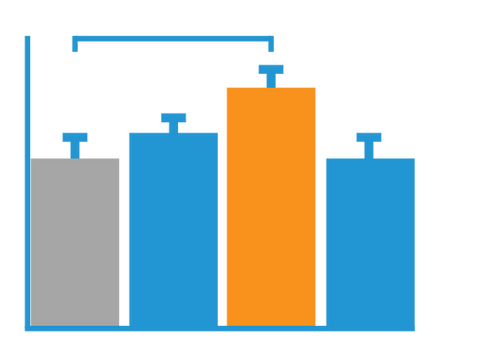
Across two separate studies, complete screening cycles including assay design, execution, and analysis were completed within approximately three to four weeks.
Performance gains observed at the strain level translated directly into higher production output, improving confidence in scale-up.
Read the whitepaper below to see more details about the technical process and results.
Screen #1
33% improvement
Product yield (mg)
Parental
Cell 1
Cell 2

Screen #2
47% improvement
Product yield (mg)
Parental
Cell 1
Cell 2
Cell 3